Ah sorry, take a letter please Christina!
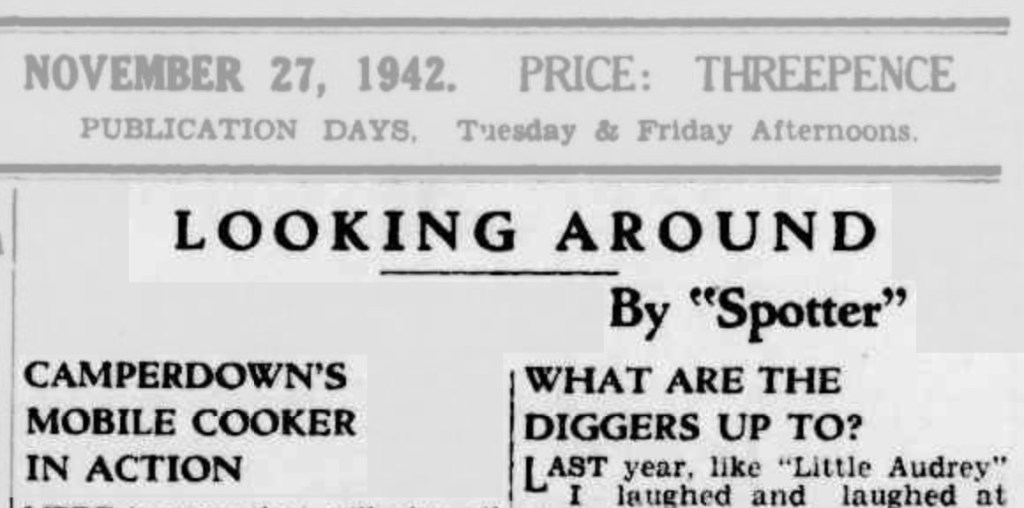
Address it to “Spotter” care of the Publisher.

Back to Contents Page
Edward FitzGerald:-
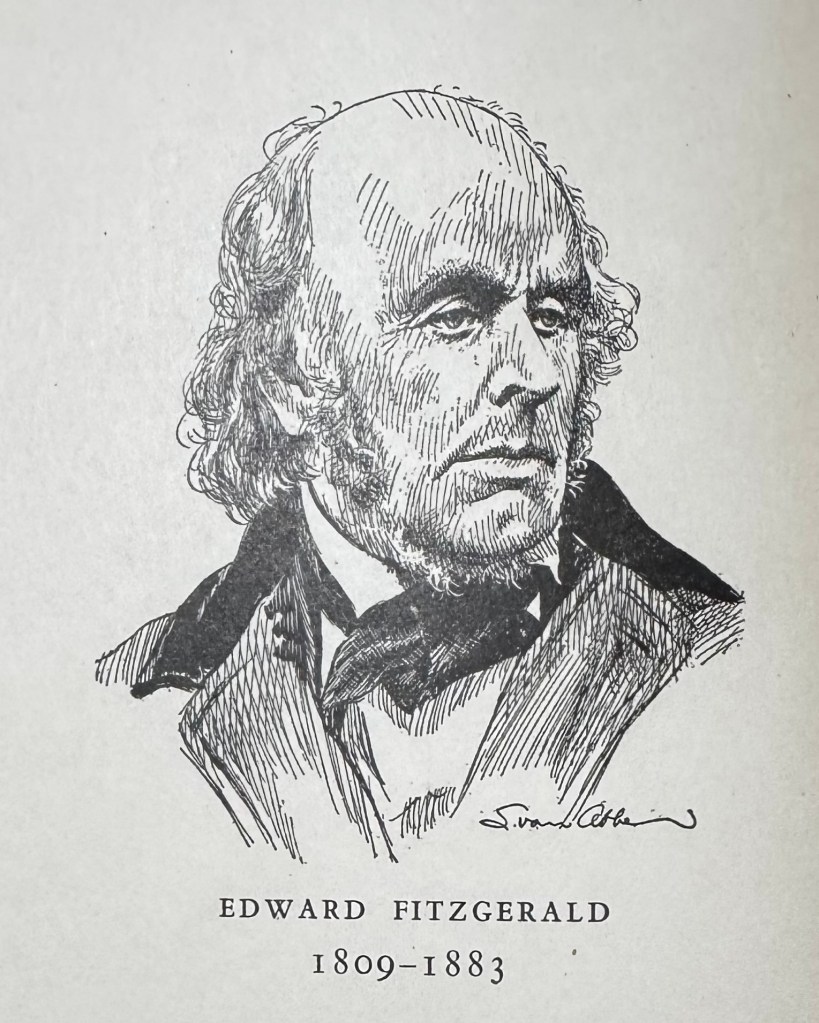
Edward FitzGerald (31st March 1809–14th June 1883) was an English poet and man of letters, born into a wealthy Suffolk family that allowed him a life of relative independence and quiet study. Educated at Trinity College, Cambridge, he moved in literary circles that included Tennyson and Thackeray, but he shunned public life, preferring rural seclusion, correspondence, and translation. FitzGerald published little under his own name and was temperamentally modest, even self-effacing, about his work.
His path to The Rubáiyát of Omar Khayyám began through his friendship with the orientalist Edward Byles Cowell, who introduced him in the mid 1850s to Persian literature and to manuscripts of quatrains attributed to the 11th-century Persian Omar Khayyám. Khayyám was a person of great learning in several fields of study.
Fascinated less by literal fidelity than by capturing what he felt was the spirit of the poetry, FitzGerald produced a highly free adaptation—selecting, rearranging, and reshaping the verses into a coherent philosophical meditation on time, fate, pleasure, and mortality.
The first edition appeared anonymously in 1859 as a small pamphlet printed at FitzGerald’s expense and published by Bernard Quaritch. It attracted almost no attention and sold so poorly that Quaritch eventually reduced the remaining copies to a penny each and placed them in a bargain box outside his shop.
From there, the poem was “discovered” by a small group of readers, including Dante Gabriel Rossetti and other Pre-Raphaelites, who recognized its originality and began to champion it. That chance rescue from obscurity transformed the Rubáiyát into one of the most famous and influential poetic works of the Victorian era—ironically, long after its author had assumed it was a failure.
FitzGerald was also fluent, but less recognised, in Greek, Latin and many Oriental languages.
How the RoK played its part:-
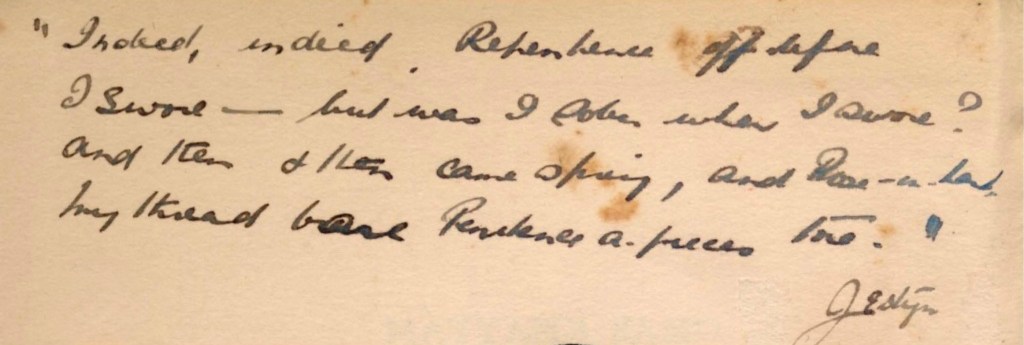
We are all familiar with this image of the “message” in the RoK supposedly handed to Alf Boxall by Jessica Harkness outside the Clifton Gardens Hotel, but what message was it meant to convey to Boxall? Was the Quatrain number (70) the most important part of the transaction?
Was it from Major William Jestyn Moulds, and why was his sub-ordinate Captain asked by the Commonwealth Hierarchy to write a letter urgently to the Australian Government recommending Moulds for an MBE when he did no more than his job building bridges, runways and roads in New Guinea and Morotai?
Moulds received an OBE soon after the letter went off.
Why did Moulds then retire so quickly?
Then comes this book find.
I photographed all its pages when it was available to do, and now I pose the question, “Is this a book of records of its time in 1945” or just some recent investigator taking notes?
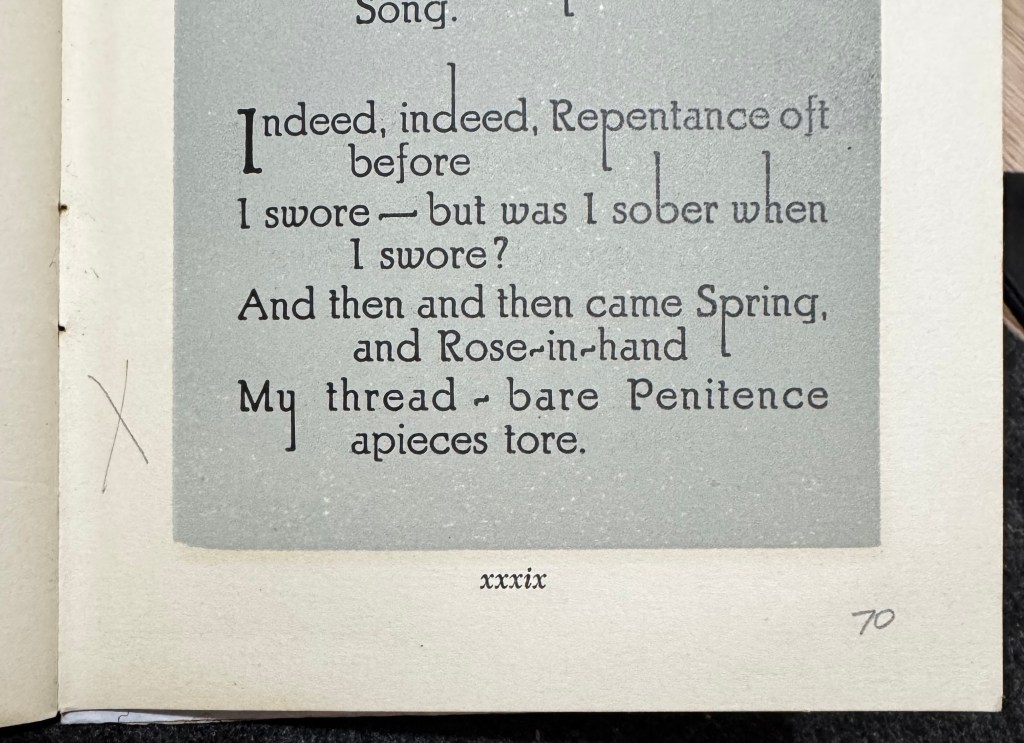
Quatrain 70 featured in the RoK Jessica was alleged to have handed Alf Boxall.
Likewise, quatrains 32 and 34 were marked with the same marking. These quatrains were highlighted in full or part in the RoK found with the deceased German born Jennie (Joan, Johanna) Louise (Laidlaw) Ogilvie in London. She was the wife of British Diplomat William Frank Ogilvie at the time.
The other quatrains marked with the same “cross” symbol are 3, 7, 10, 11, 12, 14, 16, 17, 22, 27, 38, 43, 47, 52, 56, 60 and 61.
Then there’s Quatrain 23 found on the chest of “George” Marshall in a lonely park near Sydney just near where the Harkness/Boxall transaction took place.
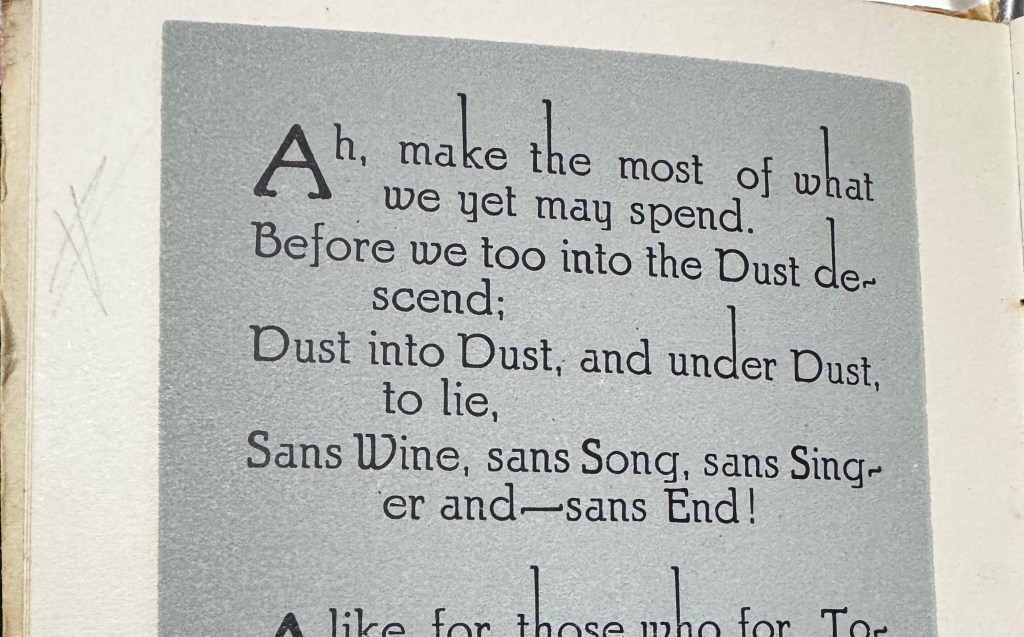
The other quatrains marked with the same “hash” symbol are 20, 33, 39, 49, 58, 69 and 74.
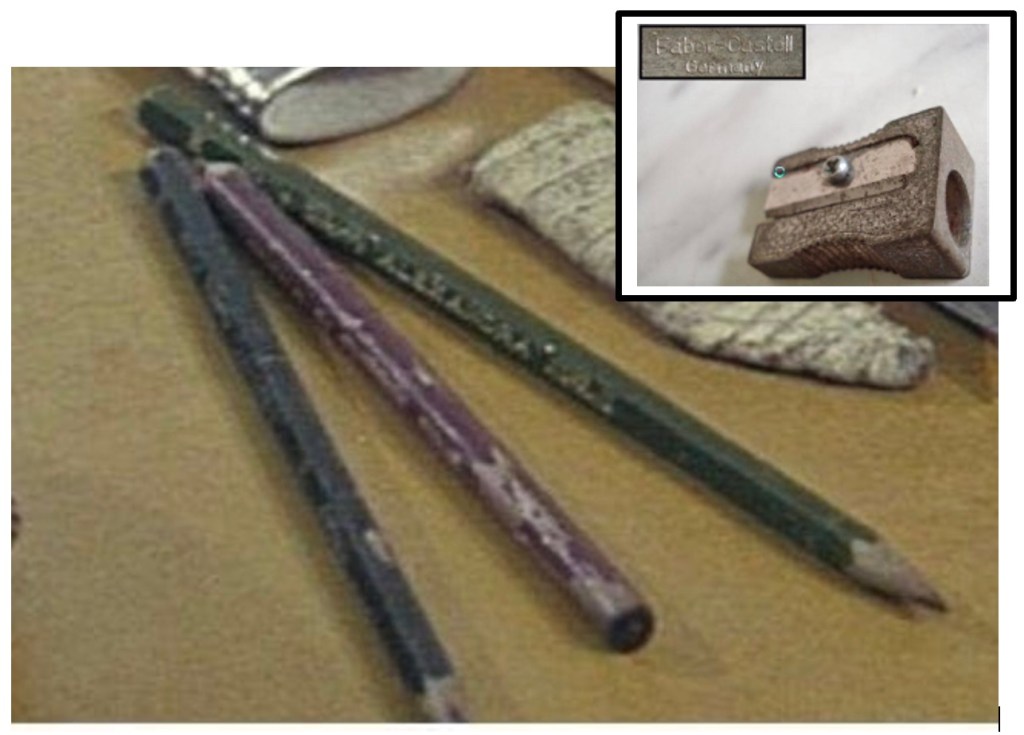
Another symbol was used for Quatrain 24 (below),
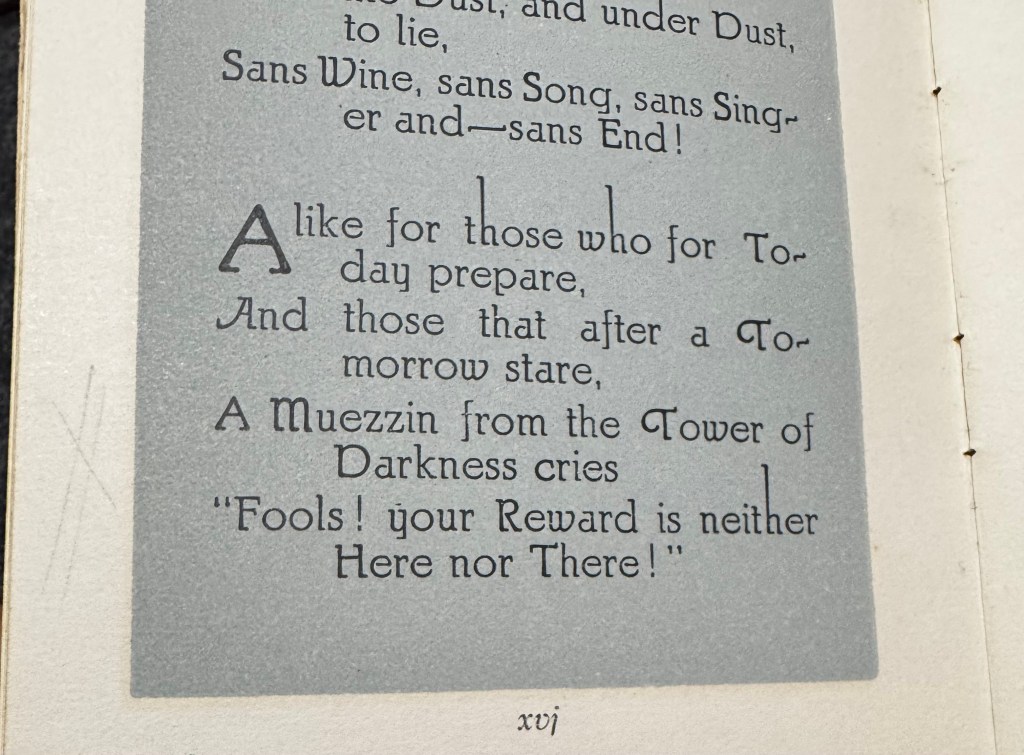
Quatrain 57 (below),
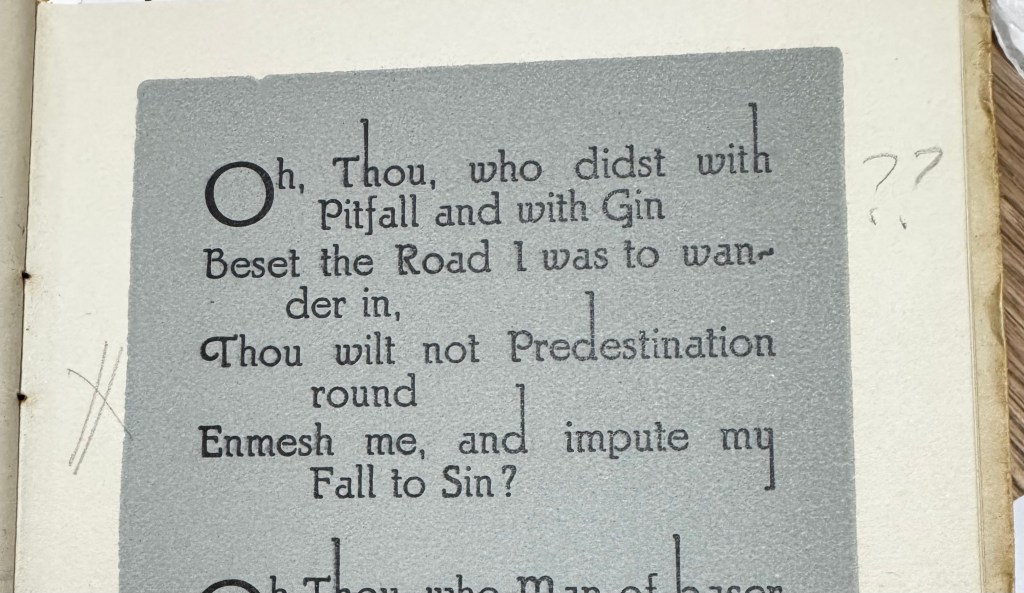
Quatrain 51 (below),
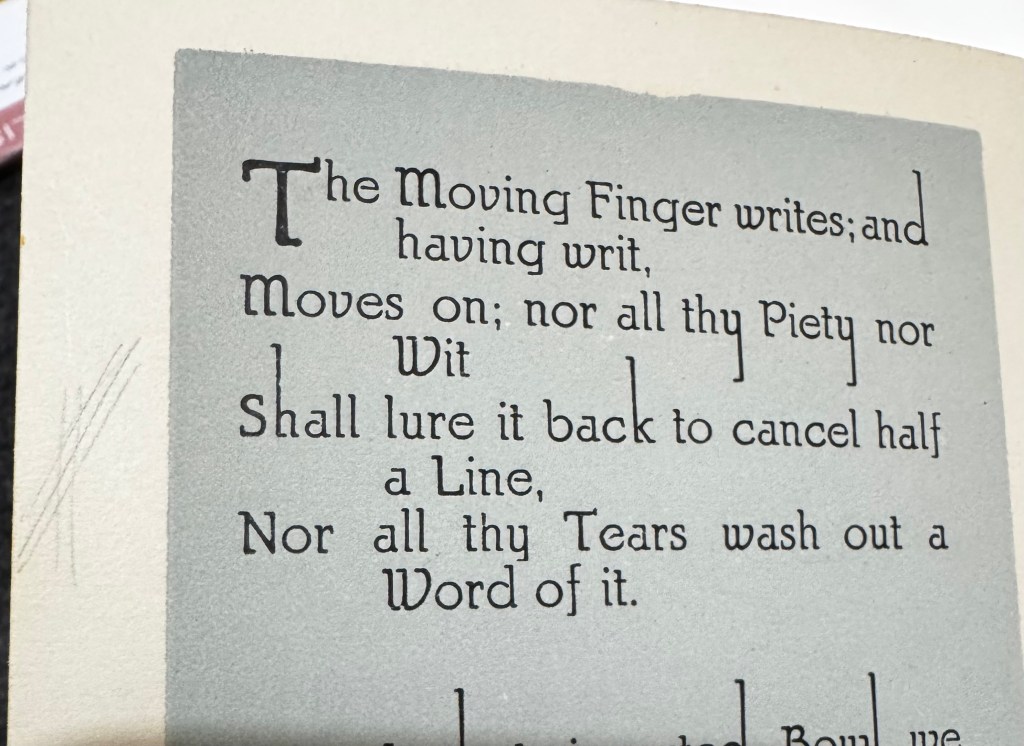
Quatrain 65 (below),
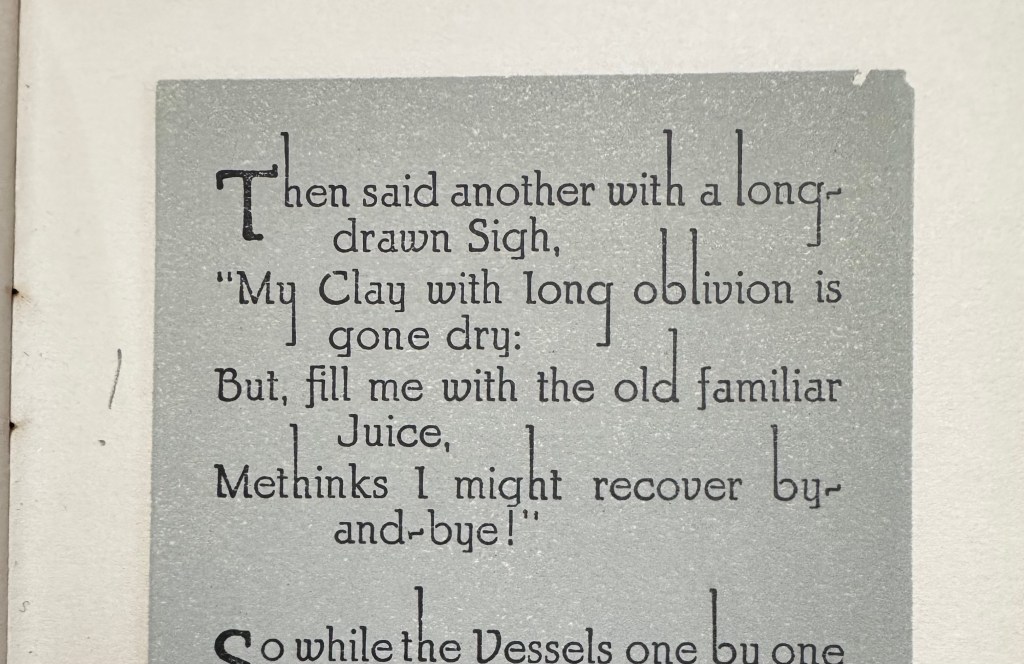
Quatrains 73 and 75 (below),
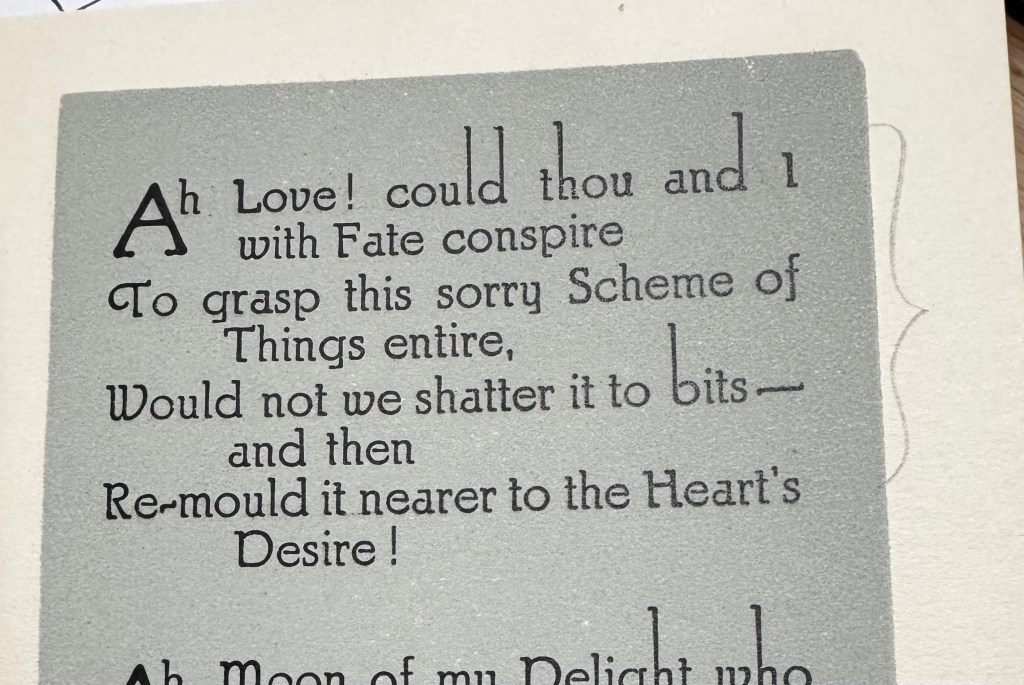
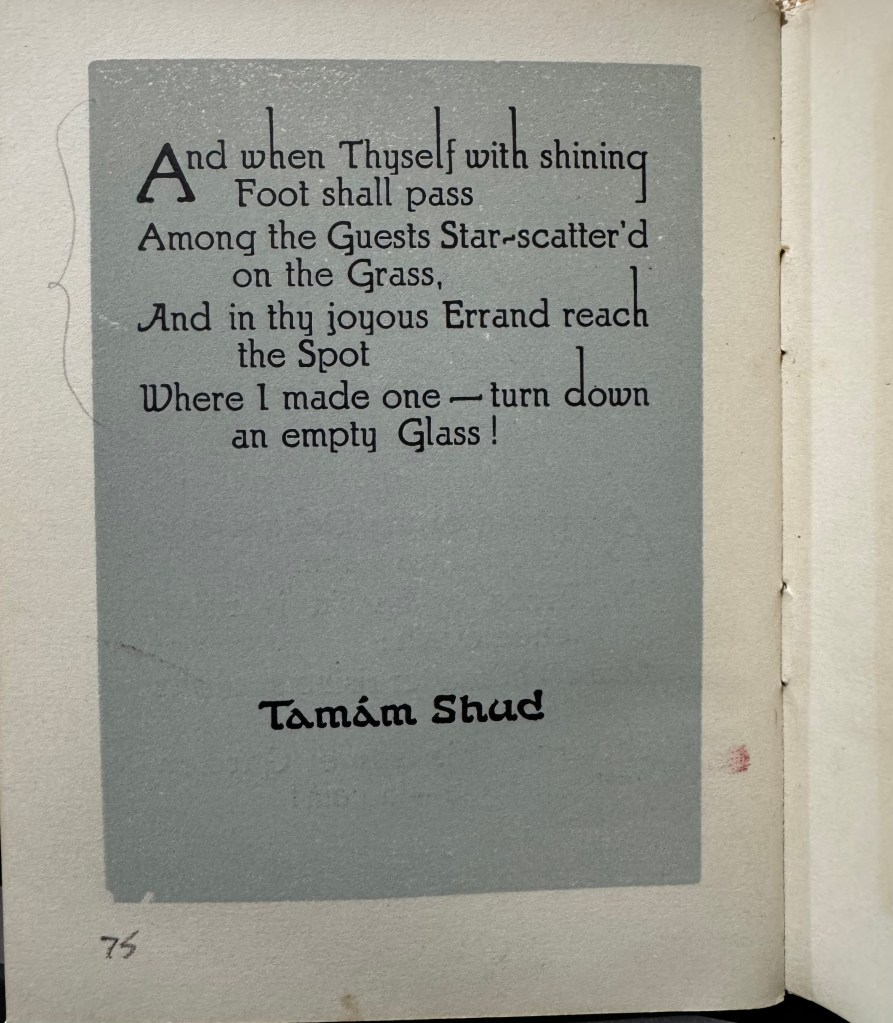
And Quatrain 37 (below),
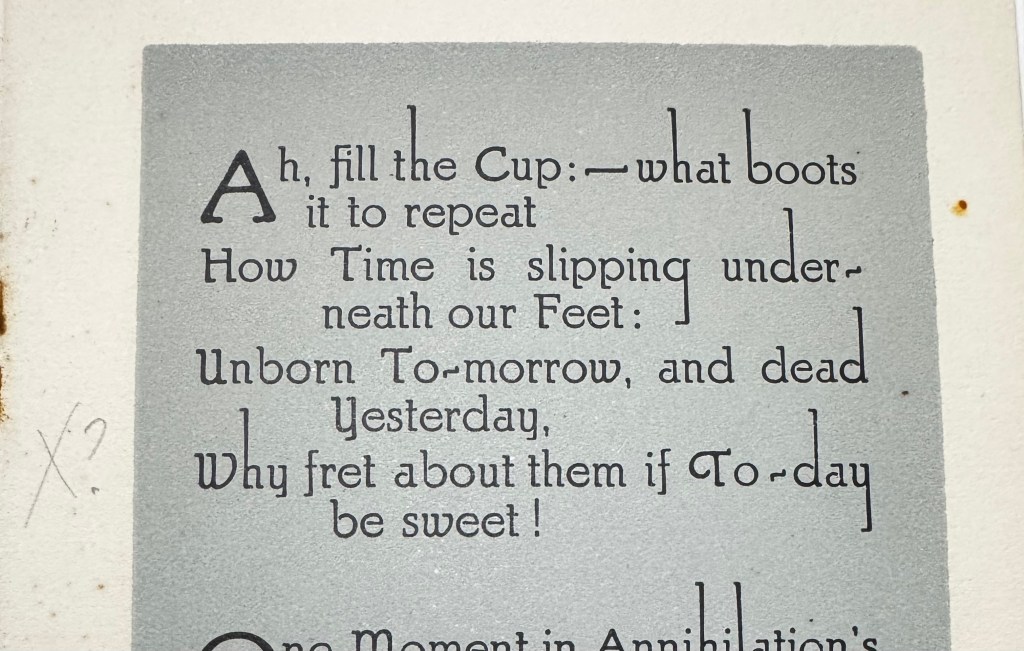
Were these symbols used to identify different projects, or could they represent different field personnel?
They may have been someone’s recent attempts to decrypt “the Code” or other thinking.
But the markings give the impression of having a great deal of mileage and time under their belts, possibly the real deal from 1945 era.
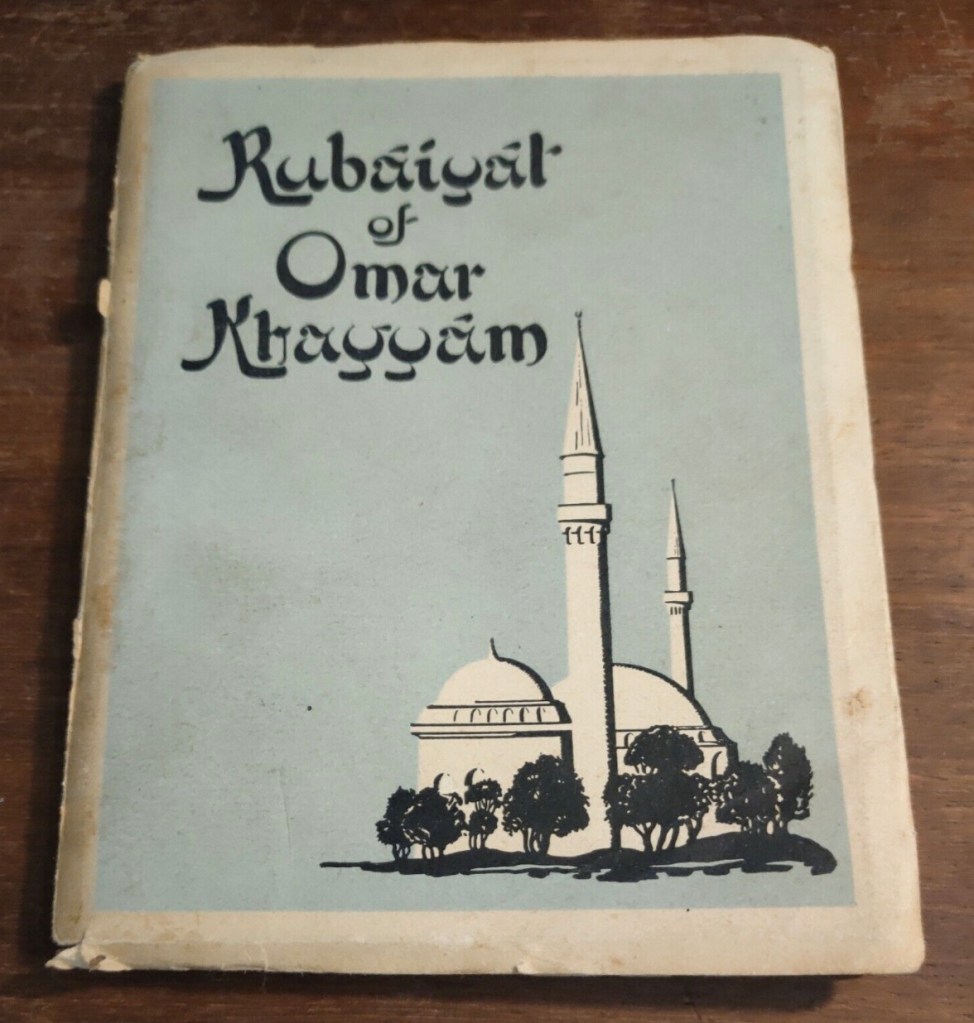
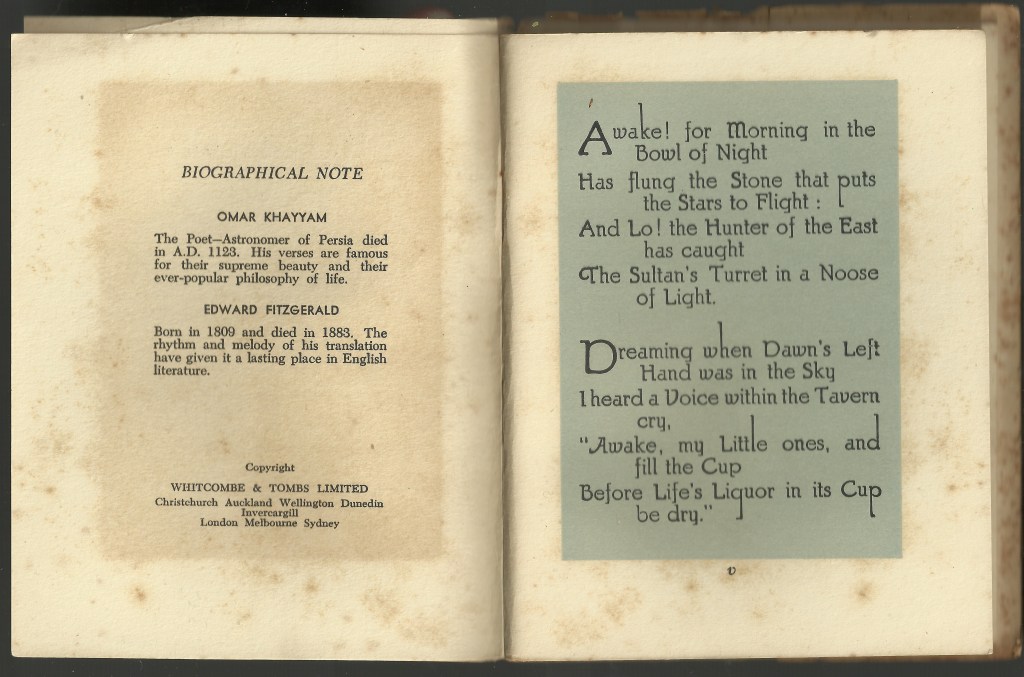
The RoK was named on the inside page and dated 1943. The owner at that time was a popular Sydney cricket playing local called “Spotty” Webb.
Take me to the Contents Page please!
To backtrack and brush up on what this case is about, go to Wikipedia here
To contact the author email onsomertonbeach@onsomertonbeach.com

 On Somerton Beach
Leave a comment