

They’re keeping us in the dark and feeding us on horse manure, are we mushrooms?
Back to Contents Page
In the final months of the Second World War, scientific cooperation between the United States and the United Kingdom had reached its peak.
British research—particularly early theoretical work and key personnel—had played a significant role in the Manhattan Project.
During this period, communication between the two nations flowed freely, reflecting a shared strategic objective.
However, once the war neared an end, the political landscape changed.
American policymakers reassessed the value and risks of unrestricted nuclear collaboration.
Concerns about security, technological control, and geopolitical advantage rose to the forefront.

In 1946, the United States enacted the Atomic Energy Act—commonly known as the McMahon Act.
Its provisions prohibited the sharing of nuclear information with any foreign power, including close wartime allies.
As a result, technical channels that once connected British and American nuclear teams were abruptly closed.
For the UK, the shift was both unexpected and consequential.
Requests for previously routine exchanges received no authorisation.
Laboratory-to-laboratory communication was reduced to formal diplomatic correspondence.

This sudden limitation forced Britain to re-evaluate its position.
Cut off from the collaborative framework it had helped build, the UK initiated its own independent nuclear programme.
The episode marked a significant turning point, redefining both nations’ approaches to nuclear policy and reshaping the post-war strategic landscape.
🕵️ But all was not happy and well in the colonies!
The 1944 Commonwealth Prime Ministers’ Conference
The 1944 Commonwealth Prime Ministers’ Conference (also called the Dominion Prime Ministers’ Conference) was the first formal Meeting of the Heads of Government of the British Commonwealth. It took place in London from 1–16 May 1944, hosted by UK Prime Minister Winston Churchill during World War II. This was the only full Commonwealth leaders’ meeting held during the war, aimed at coordinating the Allied effort as the tide turned against the Axis powers (D-Day preparations were underway secretly).
Key Attendees
- Winston Churchill (United Kingdom, host)
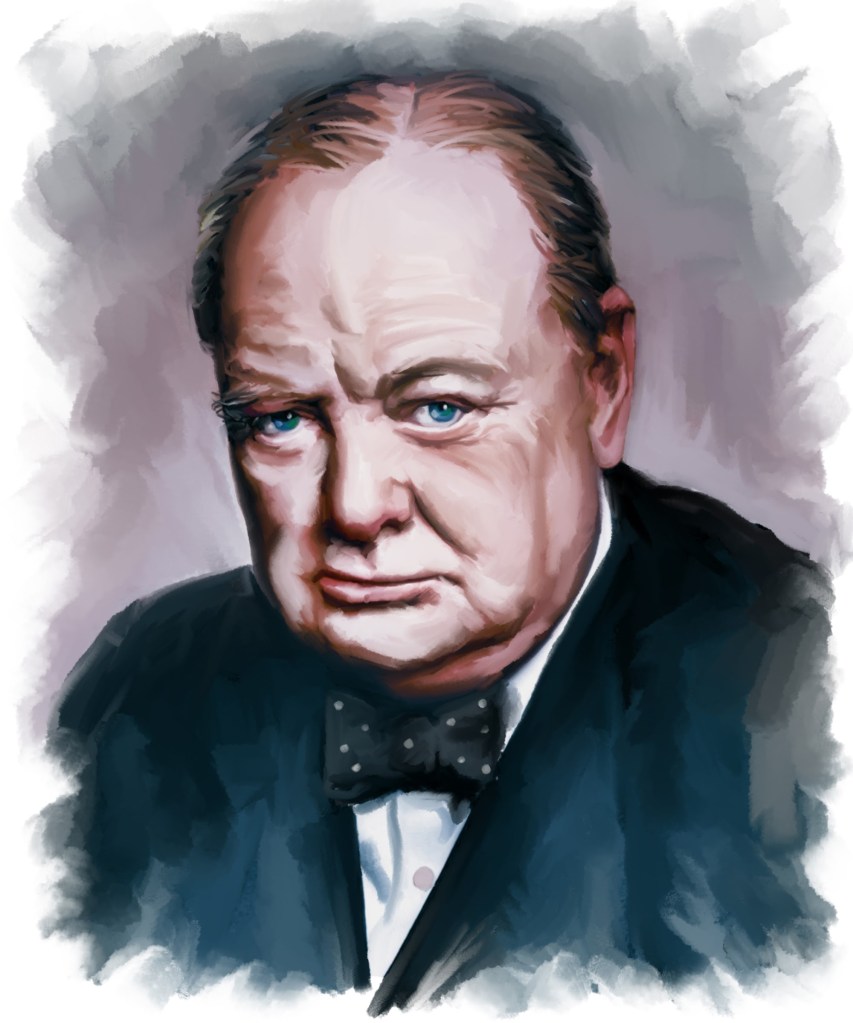
- John Curtin (Australia)
- Jan Smuts (South Africa)
- Peter Fraser (New Zealand)
- William Lyon Mackenzie King (Canada)
- Also present: Sir Godfrey Huggins (Southern Rhodesia, as an observer), a representative from India (Maharaja Jam Saheb of Nawanagar), and members of the Churchill War Cabinet.
- Ireland and Newfoundland did not participate.
The conference was divided into two weeks:–
- Week 1: Focused on military strategy (European theatre, Pacific war against Japan, foreign affairs review).
- Week 2: Shifted to post-war planning (economic policy, world settlement, colonial issues, civil aviation, shipping, employment, migration, and improving Empire/Commonwealth cooperation).
Main Outcomes and Agreements
The conference was more about consultation and alignment than binding treaties — it produced no formal signed accords but a joint statement and broad consensus.
Key results:–
- Support for the Moscow Declaration (1943)
- The leaders unanimously endorsed the Moscow Declaration (from the US-UK-USSR-China foreign ministers’ meeting), which outlined principles for post-war international security and cooperation. This signalled Commonwealth backing for a future United Nations-like organization.
- Coordination of Allied War Roles
- Agreement on each Dominion’s contributions to the final push against Germany and Japan.
- Australia (under Curtin) secured understanding that its future role would emphasize food/supply production over additional troop deployments (due to earlier Pacific threats receding).
- Reaffirmed unified strategy in Europe (imminent Normandy invasion) and the Pacific.
- Post-War Planning Discussions
- Broad agreement on economic/monetary policy, civil aviation, shipping, and full employment plans.
- Explored regional colonial arrangements (e.g., in Africa and the Pacific).
- Emphasis on migration within the Empire/Commonwealth.
- No concrete treaties, but laid groundwork for future talks (e.g., influencing Bretton Woods economic conferences later in 1944).
- Commonwealth Cooperation Machinery
- Australian PM John Curtin pushed strongly for a permanent imperial secretariat in London to ensure “full and continuous consultation” between the UK and Dominions on foreign/policy matters.
- This proposal failed to gain support — Churchill and others preferred informal, ad-hoc consultations over a formalized body (fears of bureaucracy or reduced UK flexibility).
- Instead, leaders agreed to improve existing consultation methods without structural changes.
- Other Notable Points
- Strong expressions of unity and mutual praise (e.g., Churchill highlighted “cordial agreement” on UK foreign policy conduct).
- No major rifts; Smuts and Curtin both advocated greater Dominion voices, but in different ways (Smuts more pro-Empire unity).
- The conference boosted morale and symbolized Commonwealth solidarity at a critical war moment.
Significance
- Marked the start of regular Commonwealth Heads of Government Meetings.
- Outcomes were deliberately general — focused on principles rather than details — to maintain flexibility during wartime.
In summary, the 1944 conference achieved wartime alignment and post-war vision-sharing but rejected institutional reforms like Curtin’s secretariat idea. It was a success in fostering unity without producing revolutionary changes.
🕵️ However, it was all smoke and mirrors on Curtin’s part!

John Curtin’s Proposal for a Permanent Imperial Secretariat (1944)
Australian Prime Minister John Curtin (in office 1941–1945) was a strong advocate for reforming how the British Empire/Commonwealth functioned, especially after Australia’s near-fatal experiences early in World War II (e.g., the fall of Singapore in 1942 and feeling sidelined by British decision-making). By 1943–1944, with the immediate threat to Australia receding, Curtin shifted focus to strengthening the Empire as a cooperative, equal partnership rather than a Britain-dominated hierarchy.
Background and What Curtin Proposed
Curtin first floated the idea publicly in August 1943 (in a press statement) and elaborated on it in a major speech to the Australian Labor Party conference in December 1943.
His core frustration: During the war, dominions like Australia often learned about major decisions (e.g., regarding the Pacific theatre) too late or not at all. He wanted “full and continuous consultation” between the UK and dominions on foreign policy, defence, and post-war matters.
Specific proposal at the 1944 Commonwealth Prime Ministers’ Conference (London, May 1–16):-
- Establish a permanent Empire/Commonwealth secretariat (a professional bureaucratic body) based in London or rotating between capitals.
- This secretariat would:
- Facilitate ongoing coordination (not just occasional conferences).
- Include experts “as skilled in the problems of peace as wartime advisers were in war.”
- Support an “Empire Council” or standing consultative body for quick decision-making.
- Curtin saw this as practical evolution: The Commonwealth was no longer just the “British Empire” but a family of equal nations that needed modern machinery to act cohesively in a post-war world (especially against rising powers like the US and USSR).
He prepared for nearly a year, with input from advisers like Frederick Shedden (Secretary of Defence), and viewed it as essential for Australia to have a real voice without fully breaking from the Empire.
Why Curtin Pushed So Strongly
- Wartime lessons: Australia felt abandoned when Britain prioritised Europe/Middle East over the Pacific.
- Post-war vision: Curtin believed a stronger, more coordinated Commonwealth could be a global force for good (e.g., in security, migration, economics).
- Domestic politics: Helped counter Opposition accusations that Labor/Curtin was “anti-British” after his famous 1941 “look to America” statement.
- Ironically, Curtin (a former anti-imperialist socialist) became one of the most proactive leaders on Empire reform in 1943–44.
Reception and Outcome at the 1944 Conference
- Strong opposition from most attendees:
- Canada (Mackenzie King): Fiercely against anything that could centralise power or erode dominion sovereignty. Canadians feared it might turn into a “super-government” accountable to no one or drag them into imperial commitments (especially with proximity to the isolationist US).
- South Africa (Jan Smuts): Also opposed formal structures; preferred loose, ad-hoc cooperation.
- UK (Winston Churchill): Politely but firmly resisted. Churchill valued informal consultations (which preserved British flexibility/primacy) over bureaucracy. He saw no need for permanent institutions during wartime and wanted to avoid commitments that might limit UK freedom post-war.
- New Zealand (Peter Fraser): More supportive of Empire unity but followed the group’s consensus against formal changes.
- The proposal was discussed but firmly rejected. Instead, leaders agreed only to “improve existing methods of consultation” (e.g., better telegrams, high commissioner links) without creating new bodies.
- No votes or drama — just a gentle sidestep. Curtin left disappointed but achieved his other goal: agreement that Australia could shift war effort from troops to food/production.
Long-Term Legacy
- Curtin’s idea was ahead of its time. A permanent Commonwealth Secretariat was finally created in 1965 (in London, under Arnold Smith) — exactly what he envisioned but driven by newly independent African/Asian nations rather than old dominions.
- Historians view it as evidence Curtin was a pragmatic “Commonwealth man” — balancing Australian independence with Empire loyalty — rather than a pure nationalist breaker of ties.
In short, Curtin pushed hard because he genuinely believed it would make the Commonwealth fairer and more effective for smaller members like Australia. It failed in 1944 due to fears of lost sovereignty and Churchill’s preference for the status quo, but it planted seeds for the modern Commonwealth we know today.
🕵️ But it continued to be pushed by Curtin!
And this is where the code comes in! Yes, in 1945!
Now enter into the discussion someone who was the mastermind providing John Curtin with all the research and “verbal ammunition” to covertly lobby and crusade for the changes he had outlined at the 1944 Commonwealth Prime Ministers’ Conference.

Frederick Shedden’s Role in John Curtin’s Permanent Imperial Secretariat Proposal
Sir Frederick Geoffrey Shedden (1893–1971) was Australia’s Secretary of the Department of Defence from 1937 to 1956 and one of the most influential public servants in Australian history. During World War II, he became John Curtin’s closest and most trusted adviser — often described as Curtin’s “right and left hand and head too.” His role in the 1943–1944 proposal for a permanent imperial/Commonwealth secretariat was crucial but primarily behind-the-scenes: intellectual architect, drafter, and strategic supporter.
Key Contributions
- Preparation and Intellectual Input (late 1943 – early 1944) Shedden authored a series of highly detailed, secret memoranda that formed the backbone of Curtin’s thinking on Empire/Commonwealth reform. Notable examples preserved in the National Archives of Australia (the “Shedden Collection,” A5954):
- 10 December 1943: Minute titled “British and World Commonwealth Cooperation”
- 13 December 1943: Further minute refining the ideas
- 15 January 1944: “Most Secret and Personal” minute on the same topic These papers analysed the failures of pre-war consultation (e.g., Australia’s exclusion from key decisions on Singapore and the Pacific), reviewed historical imperial conference machinery, and systematically argued for a permanent secretariat with professional staff to ensure “full and continuous consultation” among dominions.
- Shaping Curtin’s Public Position Curtin first publicly floated the idea in a press statement on 6 September 1943, but it was Shedden’s memos that gave it rigor and depth. Curtin relied heavily on these for his major December 1943 speech to the ALP Federal Conference (sometimes called his “fourth Empire” speech), where he called for structured imperial cooperation.
- At the 1944 Conference Shedden accompanied Curtin to London (along with a small delegation including General Thomas Blamey). As Curtin’s principal defence and policy adviser, he:
- Helped brief Curtin daily
- Sat in on sessions
- Provided technical and historical arguments when Curtin pressed the case. The proposal was ultimately rejected (mainly by Churchill, Mackenzie King, and Smuts), but Shedden’s preparatory work ensured Australia presented the most detailed and coherent case.
Why Shedden Was So Central
- Curtin, a former journalist and unionist with no prior administrative experience, leaned extraordinarily on Shedden for policy substance — especially on defence and imperial matters.
- Shedden was a meticulous bureaucrat with deep institutional knowledge of the British Empire/Commonwealth system (he had attended the Imperial Defence College in London).
- Historians (e.g., David Horner in Defence Supremo, David Day in John Curtin) credit Shedden as the primary intellectual force turning Curtin’s wartime frustrations into a concrete reform proposal.
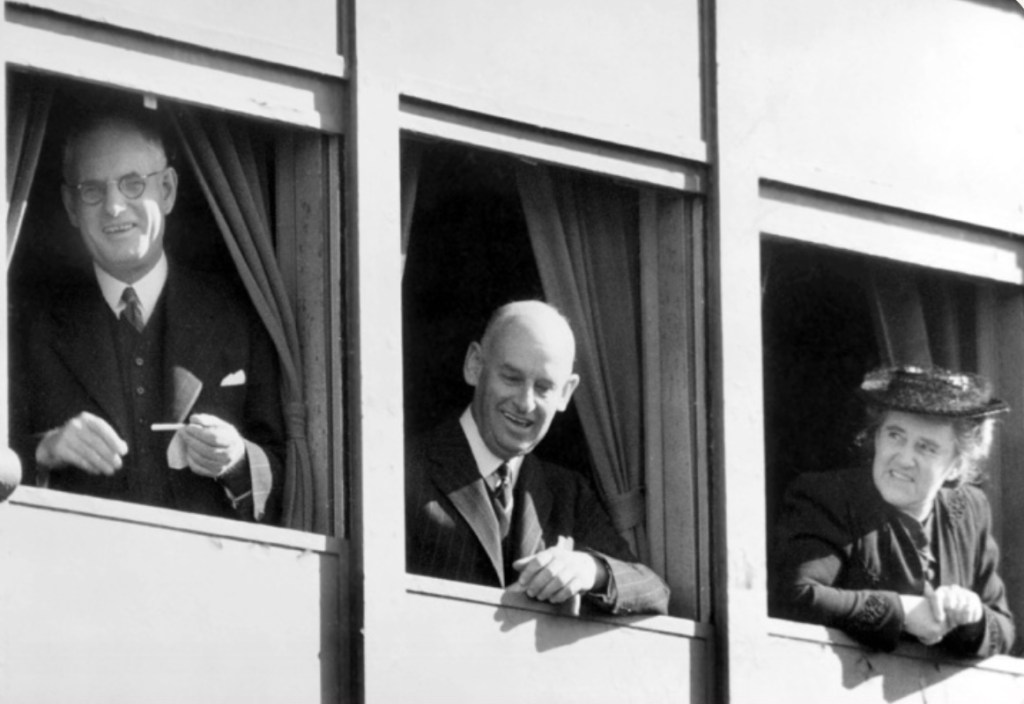
In essence, while John Curtin was the political champion who took the idea to the world stage, Frederick Shedden was the key architect who researched, drafted, and refined it over many months. The proposal was very much a joint Curtin–Shedden product, with Shedden doing the heavy analytical lifting. It was decades ahead of its time — a permanent Commonwealth Secretariat was finally established in 1965.
Content Highlights from Shedden’s Core Memos:-
- Diagnosis: Pre-war and early-war consultation had been “deficient and spasmodic.” Cited examples include Australia learning of major Singapore decisions only via press leaks.
- Solution: A small, expert secretariat (not a large bureaucracy) staffed by officers from all Commonwealth countries, located in London but potentially rotating.
- Precedents cited: Imperial War Cabinet of 1917–1918, the Committee of Imperial Defence, and the successful Eastern Group Supply Conference (Delhi, 1940–41) that Shedden himself had chaired.
- Reassurance on sovereignty: Repeatedly stressed the body would have no executive power — only advisory and coordinating functions.
- Vision: A modern Commonwealth that could act as a cohesive “third force” in world affairs alongside the US and Soviet Union.
🕵️ And who would you trust more than a country lad?
Someone ask Webb to bring the car around!
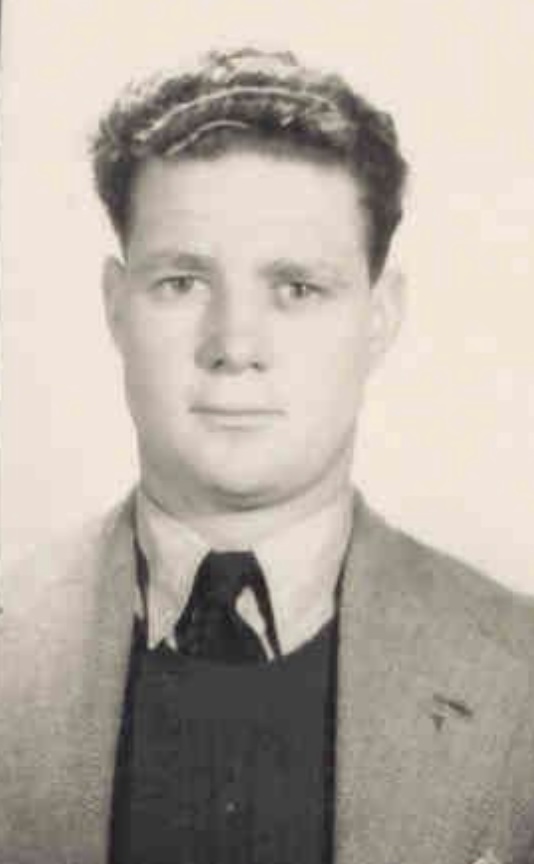
Norman Frederick Webb (often referred to as Norman F. Webb or Fred Webb in family contexts) was an Australian from Melbourne, Victoria, and a relative of Carl “Charles” Webb.
Family Connection to Carl Webb
Norman was Carl Webb’s nephew in the Webb sibling group (Carl had siblings including Roy, Russell, Freda, Gladys, and Doris). References in Somerton Man research describe “Norman Webb” as a grandfather or great-grandfather to living descendants who provided DNA confirmation and family photos in 2022.
Role as Driver/Chauffeur for Sir Frederick Shedden (1944–1945)
During World War II, high-ranking Australian officials like Sir Frederick Geoffrey Shedden (Secretary of the Department of Defence, 1937–1956, and a key figure in the War Cabinet) often had assigned military or civilian drivers/chauffeurs for security and transport, especially in Melbourne and Canberra.
Norman Frederick Webb served in this capacity as Shedden’s personal driver during 1944–1945. This role was typical for trusted personnel attached to senior Defence Department staff during wartime.
🇦🇺🇬🇧 What about we chat? Hey?
With the US and UK not communicating unless it was necessary, and some of the Colonies secretly supporting PM Curtin’s Secretariat proposal, it stands to reason that there had to be a supplementary communication system established. As it turns out the talk pipeline would be built through Australia, then back out to the world’s back channels.
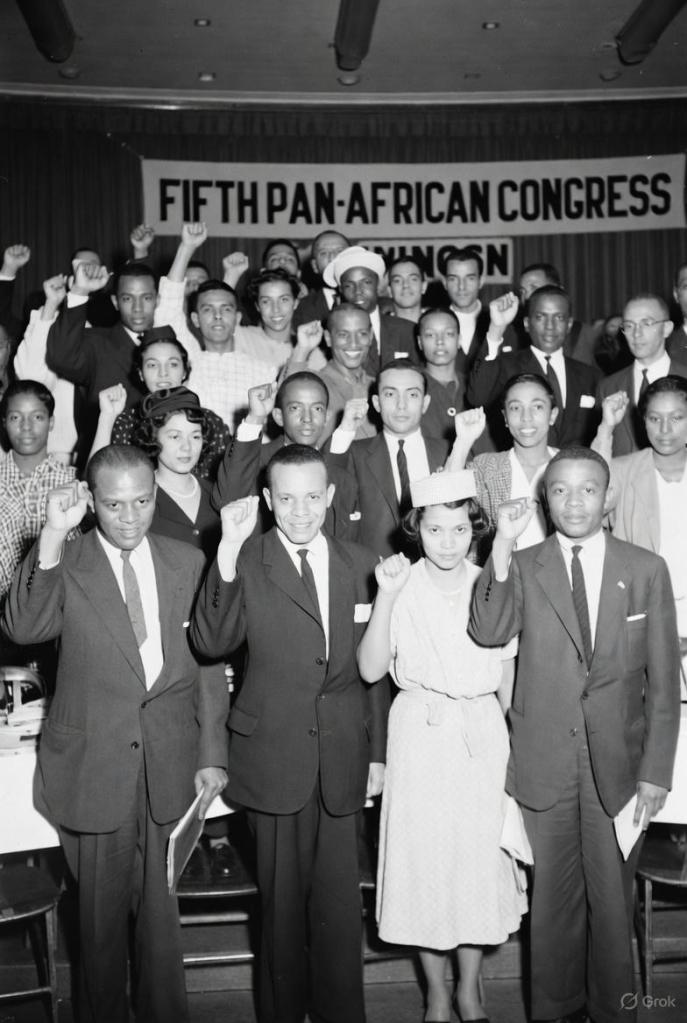
Officially, it was considered that Australia couldn’t be trusted with secret documents or messages (a term that was bandied around was that “Australia leaked like a sieve”) but that was because Australia was inundated with redirected talk channels as it maintained its links to all sides.
The Rubaiyat of Omar Khayyam (ROK) was not part of the Allied Communications System, either front of office or back door. It was used to covertly convey the information relating to the atomic weaponry to be used against Japan, and help the USSR to advance their research and construction of their own weapons during their US-USSR honeymoon period.
ROK #1 :- Passed from Jessica Ellen Harkness to Alf Boxall about early May 1945 advising that a shipment of 70 pounds (lbs) of highly enriched Uranium U235 was in transit, then,
ROK #2 :- Possessed by Joan (Johanna) Ogilvie in London but not presented till 26th May 1953. Joan (Laidlaw, Freidman, Freeman) Ogilvie was born in Hesse in Germany and was a German translator for the UK Government. Her husband William Ogilvie was a UK Diplomat and had abandoned Joan for Italy. Joan’s ROK had 2 quatrains highlighted and indicated 2 parcels of 32lbs and 34lbs of U235 in transit. Joan changed her name from Freidman to Freeman due to its inferences. And,
ROK #3 :- Found lying on the body of Saul “George” Marshall in a Sydney park on 3rd June 1945. It’s estimated “George ” met his end on the 21st May 1945. This ROK had the quatrain 23 highlighted which is exactly the required amount of enriched Plutonium Pu239 for the “Fat Man” weapon (23lbs). The perforated lid on the bottle found with “George” highlighted that his death was murder and not suicide as the bottle with the perforated lid was part a Jewish cleansing system know as the “Waters of Expiation” where the person/people have to wash their hands with this water after placing the body, on the following day, 3 days later and 7 days later to ensure the deceased doesn’t pass on any negative acts or beliefs.
Very shortly after the passing of “George” in Sydney, US General George C Marshall was relieved of his secret posting to Project Centreboard I and Centreboard II, so the ROK also outed General Marshall to the USSR and/or Germany. His job in the Pacific went to General Thomas Hardy.
The 70lbs, 32lbs and 34lbs packages of ROK #1 and ROK #2 were the total requirements for one loading of U235 to fit out “Little Boy”.
🇦🇺🇬🇧 And you won’t believe the language used in the first 2 lines of the code.
Coming next? Soon!

Take me to the Contents Page please!
To backtrack and brush up on what this case is about, go to Wikipedia here
To contact the author email onsomertonbeach@onsomertonbeach.com

 On Somerton Beach
Leave a comment